


TL;DR:
Want to rank higher in Google’s Local 3-Pack? In 2026, your restaurant’s Google Reviews are your secret weapon. Always reply (good or bad), keep reviews fresh, and encourage detailed feedback—your next SEO boost is just a friendly response away.
Most restaurant owners waste thousands on complicated SEO strategies that barely move the needle. They obsess over keyword density, meta tags, and backlink schemes while ignoring the most powerful ranking factor sitting right under their nose.
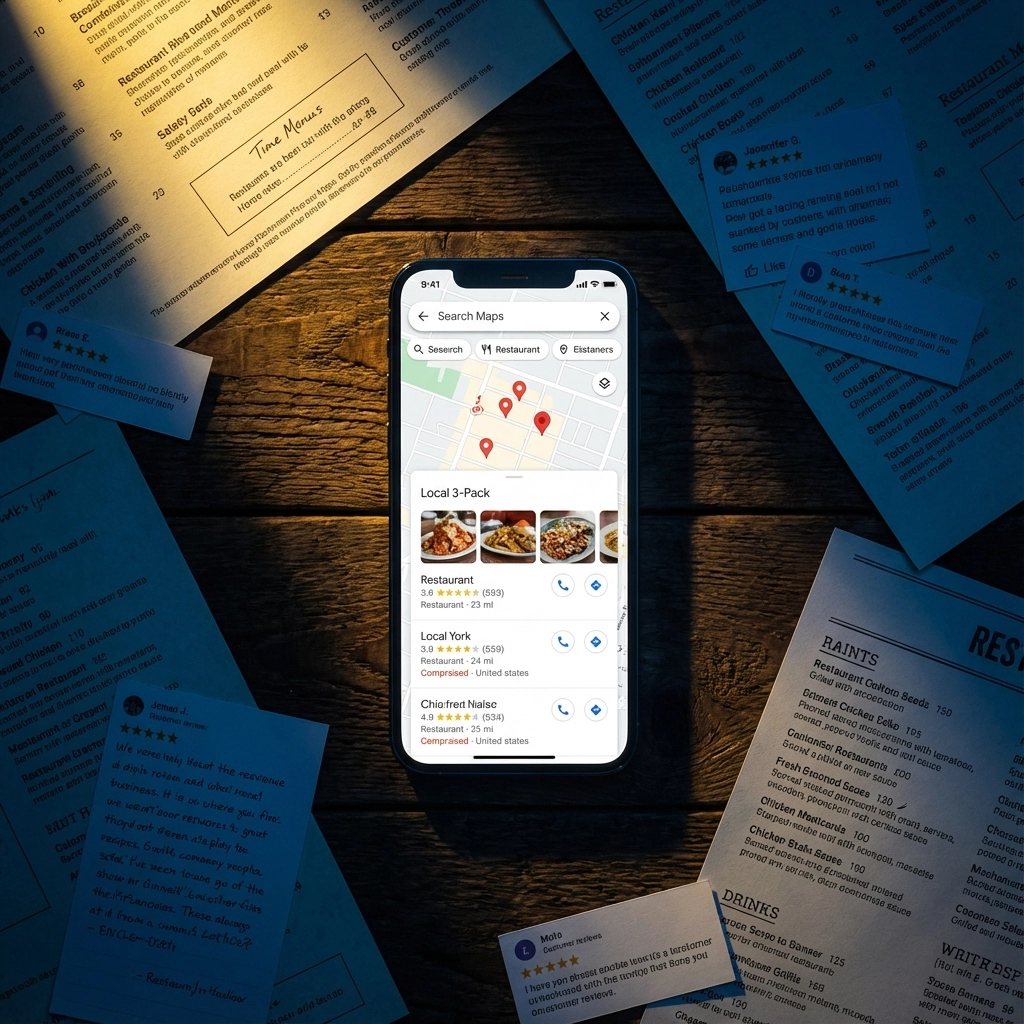
#GoogleReviews are your direct line to the Local 3-Pack. That coveted top-three spot where 75% of local searchers click. Stop overcomplicating your SEO strategy. Your reviews are doing the heavy lifting.
Why Google Reviews Rule Local Search in 2026
Google’s algorithm has evolved. It’s not just counting stars anymore. The search giant is analyzing every aspect of your review profile to determine whether your restaurant deserves prime real estate in local search results.
The Local 3-Pack isn’t just about having good food. It’s about proving to Google that you’re actively engaged with your community, consistently delivering experiences worth talking about, and maintaining relevance in your market.
The Three Pillars of Review-Powered SEO
Engagement Signals: Google is Always Watching
Every review response sends a direct signal to Google. You’re not just being polite: you’re proving your business is active, responsive, and invested in customer satisfaction.
Google Reviews tracks response rates. Restaurants that reply to every review consistently outrank those that ignore customer feedback. The algorithm interprets silence as indifference. Active engagement suggests reliability.
Reply to every single review. Good ones, bad ones, mediocre ones. Each response tells Google your restaurant is alive and paying attention. This engagement factor weighs heavily in local ranking decisions.
Freshness Beats Everything
Google Reviews prioritizes recent activity. Fresh reviews signal that your restaurant is currently operating, serving customers, and generating new experiences. Stale review profiles suggest declining relevance.
Recent reviews carry more ranking weight than older ones. A restaurant with five reviews from this month outperforms one with fifty reviews from last year. Currency matters more than volume in 2026.
This freshness factor explains why established restaurants sometimes lose rankings to newer competitors. Google assumes recent activity indicates current quality and availability.
Natural Keyword Gold Mine
Customer reviews contain the exact phrases people use when searching for restaurants. They mention specific dishes, ambiance details, location markers, and service experiences using natural, conversational language.
These authentic keywords are SEO gold. #LocalRanking When customers write “best gluten-free pasta in downtown Calgary” or “romantic date night spot near the river,” they’re creating search-friendly content that matches real user queries.
Google’s algorithm recognizes this authentic language as more valuable than forced keyword stuffing. Real customer experiences generate the exact search terms potential diners use.

The Response Strategy That Actually Works
Most restaurant owners reply with generic responses. “Thanks for the review!” or “We appreciate your feedback!” These responses waste valuable SEO opportunities.
Smart restaurant marketing includes location and service mentions in every response. Instead of generic thanks, try: “Thanks, Sarah! We’re so glad you loved your seafood pasta here in Kensington. Our chef takes pride in sourcing fresh ingredients locally.”
This response strategy serves multiple purposes. You’re naturally incorporating location keywords, specific menu items, and service details that help Google Reviews understand what your restaurant offers and where it’s located.
Negative reviews deserve the same treatment. Address specific concerns while mentioning your location and corrective measures. Turn criticism into keyword-rich content that demonstrates your commitment to improvement.
Implementation That Gets Results
Start with a systematic approach. Monitor all review platforms, but prioritize Google Reviews. They carry the most ranking weight because they’re integrated directly into Google’s search ecosystem.
Set up review monitoring alerts. Respond within 24-48 hours maximum. Fast responses signal active management to both Google and potential customers browsing your reviews.
Create response templates that include location mentions, signature dishes, and service highlights. Customize each response while maintaining consistency in your keyword strategy.
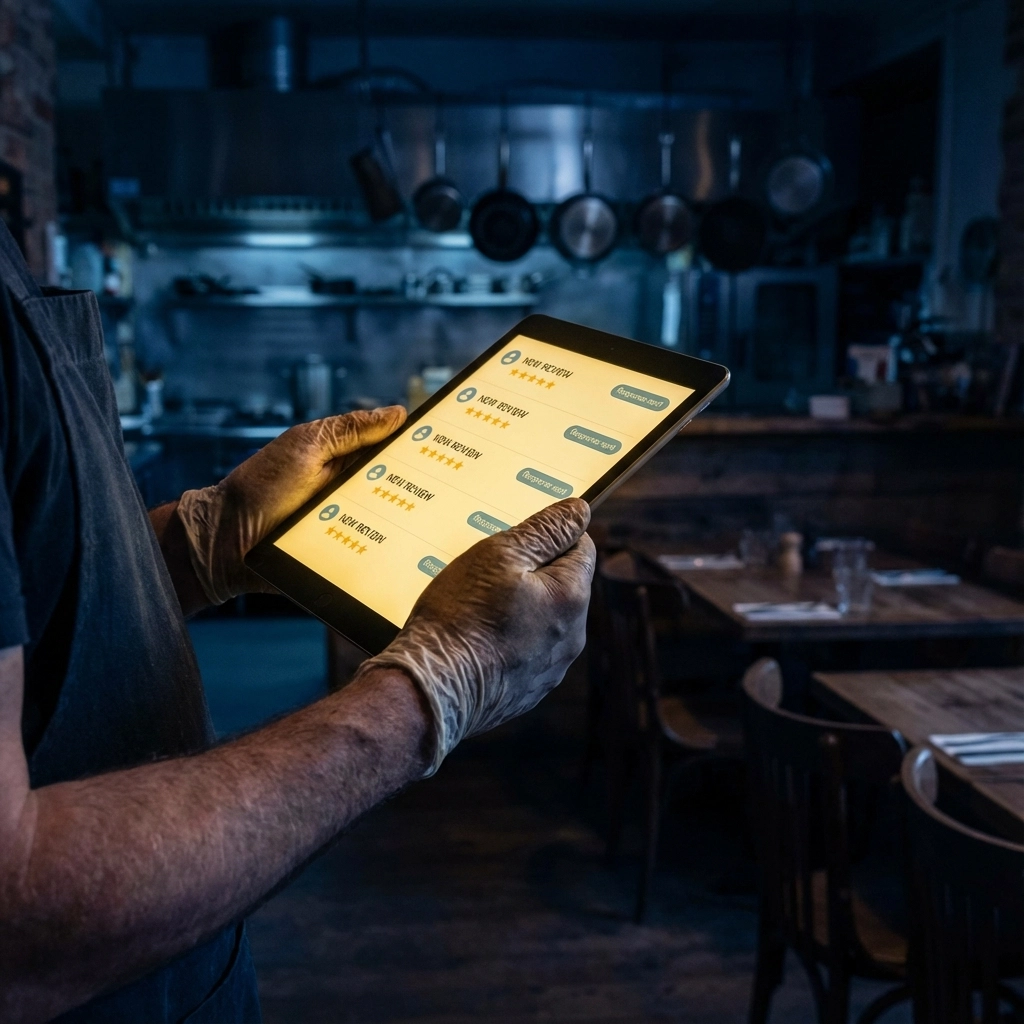
Track your Local 3-Pack rankings monthly. Most restaurant marketing efforts show ranking improvements within 30-60 days when review management becomes systematic and strategic.
Common Review SEO Mistakes
Don’t incentivize fake reviews. Google’s algorithm detects artificial review patterns. Sudden review spikes from accounts with no review history trigger penalties that devastate local rankings.
Avoid identical response language across multiple reviews. Google recognizes copy-paste responses and reduces their SEO value. Personalization matters for algorithm credibility.
Don’t ignore review platforms beyond Google. While Google Reviews carry the most weight, having consistent positive feedback across Yelp, Facebook, and industry-specific platforms creates a comprehensive online reputation that supports overall search visibility.
Why This Beats Traditional SEO
Traditional restaurant SEO focuses on website optimization, content creation, and backlink building. These tactics matter, but they’re time-intensive and often require technical expertise most restaurant owners lack.
Review management is immediate and actionable. Every customer interaction becomes an SEO opportunity. You’re building search authority through genuine business operations rather than artificial optimization tactics.
The ROI is measurable. Better local rankings mean more phone calls, more reservations, and more walk-in traffic. Review-driven SEO connects directly to revenue generation.

The 2026 Advantage
Voice search is changing how people find restaurants. When someone asks Siri or Google Assistant for “Italian restaurants near me,” the algorithm pulls heavily from review content to make recommendations.
Detailed review responses help your restaurant appear in voice search results. The specific language customers use in reviews: and your responses: becomes the foundation for voice search visibility.
AI-powered search features increasingly rely on authentic customer feedback to make restaurant recommendations. Reviews aren’t just social proof anymore: they’re search engine fuel.
Getting Started Today
Pick your five most recent reviews and craft detailed responses that mention your location, signature dishes, and specific services. This exercise establishes your response template and keyword strategy.
Set up Google My Business monitoring to catch new reviews immediately. Fast response times become competitive advantages in local search rankings.
Schedule weekly review audits. Consistent review management outperforms sporadic efforts. Make it part of your regular restaurant marketing routine.

The restaurants dominating local search in 2026 understand this simple truth: Google Reviews are the most powerful SEO tool in your arsenal. While competitors chase complicated optimization schemes, you’ll be building search authority through genuine customer relationships and strategic response management.
Stop overcomplicating your restaurant marketing strategy. Start treating every review as an SEO opportunity. Your Local 3-Pack ranking depends on it.